
Showing posts with label telugu. Show all posts
Showing posts with label telugu. Show all posts
Tuesday, March 4, 2014
Athadu Adavini Jayinchadu

Monday, March 3, 2014
Tanhayi
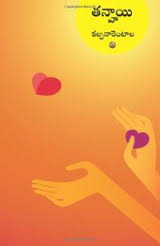
Apple has beautifully captured the essence of this novel and reviewed it very well on her blog. I'm sure it's futile for me even to attempt to surpass or at least reach its detail and style. So, I urge the readers to check it out here. I've picked up this book after reading this review and I second it completely. Tanhayi is a modern-day novel that almost anyone can relate to. It's about the inner struggle of a man and a woman who find themselves in love out of their marriages. It gives much food for thought. The point was not to judge or preach. Life never seems as smooth as we would like it to be. It throws surprises at us, when we are least prepared. For Kalhaara and Koushik, it was true love under wrong circumstances.
Thursday, April 25, 2013
Nijaniki Feminijaniki Madhya - Nidadhavolu Malathi Kathalu

This collection of 45 stories by Nidadhavolu Malathi was a random pick from the library. I never heard about either the book or the author before and hence started reading it with certain skepticism. Soon, I got absorbed into the varied themes the stories touched upon and realized that I like the collection. The author dealt with subtle emotions and portrayed the prevalent societal norms and values in the most non-dramatic manner. Some of them depicted NRI lives in USA. This is the first time I encountered that theme in Telugu literature and I found it refreshing.
Also, one important thing that struck me as I read through the stories was that the protagonists were not idealistic; they were normal with their own shortcomings and insecurities. They didn't do great things and didn't often solve their own problems. I felt that the author didn't try to convey any message or tried to solve the characters' issues, which makes these stories an artistic record of the author's astute and fine observations of human behavior. Essentially this characteristic leaves a lot for the readers to think about and reflect on.
Barring a few stories, which didn't appeal to me, the collection makes a decent read.
Saturday, February 23, 2013
Amaravathi Kathalu

I presume Satyam Sankaramanchi's Amaravathi Kathalu needs neither an introduction nor any specific recommendation. I have had the opportunity to read this classic collection of stories only now and really feel fortunate for being able to do so. These are perhaps the sweetest and the most beautiful stories I've ever read. It's a collection of 100 stories, all based in the sacred town - Amaravathi. Lord Siva and river Krishna comprise the major elements, or rather the under current of all the stories. It's a medley of various emotions and facets of life.
I borrow a few words from the end note by MVL that aptly reflects my thoughts about this work:
Chadivina vaari kallallo krishna ponginchi
gundelo tiyyati manta ragilinche
gaadhasathi amaravathi kathalu
Even though each and every story is exquisite and I enjoyed reading all of them, one has cast a deep impression on my mind. Rendu gangalu: it's a simple story of or rather narration of rejoicing the rain. The simplicity and the beauty of it is just splendid!
Wednesday, May 16, 2012
Saalabhanjika
Saalabhanjika by Kuppili Padma is a collection of 11 stories which had appeared in various magazines over the period of 1997 to 2001. All the stories portray women - strong and independent, even as they jostle against the circumstances. Loved the writing style. "Athani Kalalu", the first story in the collection, seemed abstract and poetic. It describes the desperation of a woman to seek divorce from her husband. The title story "Saalabhanjika" is about the life of 'escorts'. Other stories too are set in varied backdrops, dealing with the usual aspects such as love, family, marriage, betrayal, and sex.
Each story is different in its own and still has a connecting thread to the rest of the collection. "Saalabhanjika" is a gratifying read.
Each story is different in its own and still has a connecting thread to the rest of the collection. "Saalabhanjika" is a gratifying read.
Thursday, May 10, 2012
From Anuradha, With Love
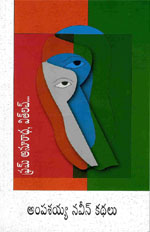
This is a collection of 23 short stories by Ampasayya Naveen. More than a few stories deal with naxalism - how it lures young minds to their doom and how it adversely impacts the common man.A few stories are about the subtle and not so subtle abuse women face and the need to question it and get out of the situation. There are also stories about general married life, which strike a chord or two for many. Bonded labor too gets mentioned in many stories and makes the readers to acknowledge the atrociousness of it. Some stories also talk about the fragile and impermanent relationships between people. All in all, it's an engaging mixed bag.
Wednesday, April 25, 2012
Ampasayya

Ampasayya by Naveen had been in my "to-read" list for a long time. Naveen was recommended to me by a literary friend a while back and I've been keen to read him ever since. Ampasayya was his first novel and was so popular that Naveen became Ampasayya Naveen after that.
It's the depiction of a student's life, caught up in restlessness. It portrays the inner turmoil of a student fighting various emotions and ideals. It was dated back to later '60s and it's interesting to see that many of the issues are still relevant to today's students.
The narration is of a different style and flowing, just like the thoughts seamlessly whirling around in one's mind. It had been quite a good reading experience. The book has the same comfort pace throughout and there never was a dull moment. I look forward to read more of the author,most of whose works are supposed to be based on youngsters.
Thursday, April 12, 2012
Mullapoodi Venkataramana Katha Ramaneeyam - 2
This is a real treat. It is a collection of short stories categorized into sections like
- Rasa Ramaneeyam
- Sarasa Ramaneeyam
- Runa Ramaneeyam
- Jana Ramaneeyam
- Lokaabhi Ramaneeyam
- Saradaa Ramaneeyam
- Koutilya Ramaneeyam
- Baala Ramaneeyam.
The wit and wisdom of the author are evident in each and every story. The puns and sarcastic observations are both amusing and enlightening. One can easily perceive the romantic nature of the author by the artful and subtle way he deals with the subjects. The story "Kaanuka" is about Gopanna who strives to make the perfect flute to gift to Lord Krishna through 25 years unable to be satisfied with any of his innumerable outputs. This is such a beautiful story that I fell in love with it right away. Sarasa Ramaneeyam, where he speaks about love-stricken men and their mostly assumed predicaments and troubles is worth to be marveled about. The wisdom and quips ingrained in Runa Ramaneeyam demands outright commendation. Not that anything is ground-breaking, what I meant to convey is that you can't help admiring the way the author has laid out things. Did you know that Mullapoodi is the one who created the famous character "Apparao", who lives only on loans, and a special lingo associated with the art of taking loans? It's amazing to read about the apparent talent of such people, albeit in fiction. :-) All the other stories too deserve to be mentioned for their awesomeness.
I read the Volume 1 of Katha Ramaneeyam almost 4 years back. Though I don't remember much of what I read from it, I remember relishing the collection. I guess I enjoyed Volume 2 more but it may be only because I evolved more as a reader since back then and not because that Volume 1 was any less appealing.
Vishalandhra Publishing House
Price: Rs. 150
Sunday, February 26, 2012
Hamsaavali
Written at least a few decades earlier, this set of short stories by Pulicherla Subbarao reflect the sentiments and values of those times. I couldn't help observing that at least a few stories are old-fashioned in terms of the subject matter. Not that the inherent sentiments and emotions don't hold true now, but the sheer fact that we've read in literature, watched on screen, and even observed in our lives a lot about an ungrateful son ignoring his parents in their old age, a wealthy brother ill-treating his less fortune sibling, relatives abusing the orphaned kid etc. made these stories seem common. Moreover, the tragedy involved in almost all the stories wrung my heart so much that I couldn't bear it.
I couldn't help reacting to some of the sentiments described in a couple of stories though. An excerpt:
"Inke mundannayya! Mana vamseekulu ika talettuku tiragaleru. Daani pelli kaavatam alaa unchu. Ika Suguna batiki maatram em laabham? Appude chachi poyinaa baagundedi."
These are the feelings of the cousin of the rape victim. I don't want to get started on this but the stupidity, unfairness of it all makes my blood boil. In the end, the family and the society succeeds in killing the girl - she commits suicide.
I agree that society thinks like this, but the author made no attempt to let the readers realize that this is atrocious and unfair.
Another example is about the dowry issue. The story is about the inner struggle of and burden felt by a father, who is unable to marry his daughter off due to lack of enough money. The dominant sentiment in this story is - a girl not married at proper age is doomed. But the author did better for this story by making the girl stand up for herself and her family.
The writing and narration are good and the 15 stories cover varied aspects of society. This collection makes a good read for Telugu short story lovers. Despite all, there is no doubt it's a good literary treat.
Thursday, December 29, 2011
Oka Hijra Katha
This is a collection of 8 stories translated from Urdu and Hindi by Paravastu Lokeswar. Of the eight, three are by Khushwant Singh, all historical works depicting 19th and pre-19th century Delhi. The other works are by Ismat Chugtai, Qurratulain Hyder, Kamala Das, Abdul Jabbaar, and Kishan Chander, which dealt with different topics. The stories are all very interesting and the translation of Lokeswar ensures that the collection is a great read. The translation is good and natural.
My favorites from this collection include:
The title story "Oka Hijra Katha" by Abdul Jabbaar is also good.
Publishers: Gandhi Prachuranalu
Price: Rs. 50
My favorites from this collection include:
- Gruha Nirmata by Ismat Chugtai (I've read her before in another collection and with this story, I've taken a special liking to her work)
- Paruvu - Prathista by Qurratulain Hyder
- Meet Taki Meer by Khushwant Singh (This is the life story of a renowned Urdu poet of 17th and 18th centuries)
The title story "Oka Hijra Katha" by Abdul Jabbaar is also good.
Publishers: Gandhi Prachuranalu
Price: Rs. 50
Tuesday, December 13, 2011
Alochinchu

Picked up this novel by Malathi Chandoor driven by the positive review by an acquaintance. But I'm extremely disappointed. In fact, I'm so outraged by the novel. The writing is good but the story and the message it conveys didn't ring well with me. I'm actually impressed by her portrayal of lead characters in the first half of the story and didn't quite understand how she could degrade her characters to such an extent in the later half. The story is about a couple with liberal views and high individuality. They undergo civil marriage against the wishes of their families and stick to their principles through thick and thin. But for not too long, it turns out to be. The change in the husband is gradual and the wife gets puzzled over this but could do nothing about it. All this is well and good but here comes the shift: the husband gets involved in illicit affairs. What is truly disconcerting about this is that the wife keeps quiet about it despite her obvious displeasure. The usual reasons are given : family, kids etc. Her world shatters when the husband declares that he needs to go for second marriage as the object of his illicit pleasure is pregnant and he is morally obligated to marry and protect her and the offspring. He stresses that he has no other choice and is clearly aware of the pain it causes to the wife. He assures that he cares for her a lot and that's the reason why he informed her about his decision before acting. (Ridiculous!) Indeed, the wife's world shatters, and she goes into severe depression and finally takes solace in the teachings of a swamiji and finds a purpose to her life (social service).
Given the strong character of the wife, it isn't clear why the author didn't make her stand up for herself. The wife undergoes a lot of turmoil, hates the husband (actually, the opening and ending notes of the story convey her feeling of resentment towards him), hates the life in general. The most atrocious of all is the view that "men have such weakness by their biological structure, they can't help it and hence illicit relationships are common and should be ignored". This perspective is conveyed by both the erring husband and god forbid, the swamiji. Swamiji urges the wife to "think" from others' (husband and the other woman) perspective and understand them. He says that separating from the husband is not a solution because the question of self-esteem doesn't come into the picture. The husband still cares for her and is not physically hurting or ignoring the wife. So, the reason why the wife is so devastated is only because her ego had been hurt.
I lost it there. What nonsense is this? What use is the intellect,the reasoning capability, and individualistic character of the wife if she finally accepts the swamiji's advice? (She argues with the husband that "biological differences may exist, but isn't adultery a moral issue and aren't morals same for all?) She isn't happy by no means at the end, but at least she has found the courage to take on life. My question is, why should she? By being with the husband, whether whole-heartedly or not, she seemed to have supported his actions, if only indirectly and after lot of tamasha. The thing is, the husband never feels that he has done anything wrong. The problem arose and he had to trouble the wife only because the other one became pregnant.
The author depicted the inner struggle of the wife commendably and put forth valid points and arguments but she spoiled it all by making her react as she did. One probable reason why it's impossible for the wife to desert the husband is her love for him. He is the world for her and now that he has cheated her (she feels so cheated only when he marries another woman, not during his uneventful affairs), she couldn't bear it. So, what about his love for her? Is it possible to simultaneously love the wife and be promiscuous? (The novel seems to say so.) If so, what kind of love is it? Is that valid?
A perfect story with flawed message.
Friday, September 9, 2011
Amma Ki Aadivaaram Ledaa?
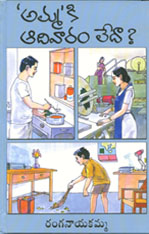
This is a collection of 52 stories by Ranganaayakamma. Like her novels, I loved this book too. Reading her is like education. She strives to bring clarity between the good and the bad in her stories and characters. She doesn't like to be ambiguous about such things like some others do and it's such a relief.
I'm really surprised, rather pleasantly, to read about how she makes changes and improves her works in subsequent editions depending on how her own opinions change owing to greater knowledge and expereince. I wonder how many authors do this kind of exercise.
In these stories I got the taste of her sarcasm and also humor apart from her usual style. Notable sarcastic/ humorous stories include - Pellaniki Premalekha - which tells that a wife expects to be loved by her husband, not just needed; Kanipinchutaledu - funny naration by a husband of a "muggu" addict wife; Pelli chesesaam - about people who regards acceptance to social norms is the only way to live; Kutra - very fuuny account of how revolutionists are conspiring against people by writing their literature in a wrong and complex language. There are also many stories which make us think and learn something. But I assure you that they are equally or even more entertaining.
I'm very much impressed by her feminist ideas and also her principled nature. She is a marxist and one can find more than a few stories in this collection in which she expresses those ideas. She believes that marxism is the only knowledge worth enough to know, the dearth of which makes lives worthless. According to her (marxism), accumulation of wealth is a crime. If there is wealth, it comes only by exploiting others. When a landlord sits at home, has servants to do the work both in the house and the land, he is just exploiting them. I'm not sure I agree with all this. Or it might just mean my ignorance about the valuable marxism and am in a hopeless state.
Thursday, August 25, 2011
Matti Manishi
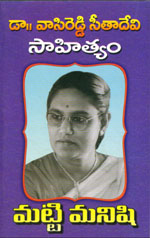
Matti Manishi by Vasireddy Sitadevi is a remarkable novel and undoubtedly one of her best. It is about land and fuedalism. The story is mainly about Sambaiah, who is a devout farmer and his love for land/earth. When he gets his son married to the daughter of a feudal lord in decline, everything changes. The daughter-in-law, Varudhini, separates the father and the son and gradually disposes off the family wealth. Upon the tragic demise of Varudhini and of everything she stood for, her son comes back to Sambaiah to learn the ways of land and share his grandfather’s love for it.
I found a few traces of Buck’s classic The Good Earth in this novel, especially while reading about Sambaiah and his steady growth to richness. Matti Manishi is a riveting read of conflicting emotions and beliefs.
Sunday, June 5, 2011
Seela Veerraju Kathalu

I just finished reading a collection of short stories by Seela Veerraju. I’m still reveling those wonderful stories. These are by far the best stories I’ve ever read. I loved the author’s beautiful descriptions of nature and beauty. I never read anything so enthralling before. The characters and the plots stay with you long after you’ve finished reading them. The language was delectable and the simplicity and depth of the stories captivated me. I really am neither able to express how much I liked the collection nor what joy I felt reading those stories. It’s pure joy of experiencing fine talent.
“Seela Veerraju Kathalu” would remain one of my all-time favorites. This book includes 34 stories.
Sunday, May 22, 2011
HRF Bulletin…Visthaapana – Vidhwamsam
Ee bulletin lo mana Govt chesthunna (chesthunnaamani cheppukuntunna) development projects gurinchina detailed reports, vaati pros and cons annee vunnaayi…Govt approve chesina SEZs, Projects kosam gather chesina bhoomulu, vaati valana asrayam kolpoyina vaalla problems, Coastal corridor peru tho pollute avuthunna environmental balance ilaanti issues gurinchi enno vishayaalu vunnaayi…
Prasthutham adhikaaramlo, prathipaksham lo vunna ye party ni adiginaa thama aim state ni develop cheyyadame ani chepthaaru…but development ante vaalla definition enti? Andarikee manchi education, thindi, arogyam, illu veetitho comfortable life ivi provide cheyyadam anukundaam…kaanee jaruguthunnadi totally different…Abhivrudhi perutho corporate companies ki mana statelo vunna human and natural resources oppachepthunnaaru kadaa…deeni valla equal oppurtunities atunchi pedda pedda companies laabha paduthunnaayi….. poor ppl emo vunna kastha aadhaaram (bhoomi, neeru, adavulu veeti meeda depend ayi brathukuthunna ppl) pogottukuni homeless avuthunnaaru…Societylo differences peruguthaayi + Natural resourcesni chethulaara maname nasanam chesukuni muppu techukuntunnaam…chaalaa mandi argue chesthaaru…Govt vaallaki vere alternatives provide chesi, kothaga start chesthunna works lo vallaki employment provide chesthondi kadaa ani…Deeniki example gaa mana Govt approve chesina SEZs gurinchi discuss chesaaru….
Kotha companies, industries pedithe andulo employement provide chesthaam asrayam pogottkunna vaallaki ani chepthaaru…Mana govt approve chesina 57 SEZs lo 39 IT related vi…veetilo poor n uneducated ppl ki udyogaalu ivvaleru…so baagupadedi chaduvukunna vaallu, nastapoyedi chaduvuleni (chaduvukoleni) village ppl…vaalla lands, houses annee govtki dhaaradhattam chesi…alanee Pharma SEZlu…ee IT companies construction stagelo vundagaa labour work avee vuntaayi, kaanee avi temperory ne kadaa..aa tarvatha vaallu ekkadiki vellaali? Ponee kotha industries ki related townships lo veellaki employment vuntundaa ante enthamandiki provide cheyyagalaru? Factorieslo labour work ichinaa andulo labour laws n rights ki sambandhinchi chaalaa exceptions ichaaruta….Ee SEZla kosam bhoo sekarana valla niraasrayulayyedi ekkuva mandi elaanti technical skills, chaduvu, exposure leni aadivaaseelu, chepalu patte vaallu, tribals…edo real estate market perigi ekara, rendekaraalu vunna farmers polaalu ammukuni aa dabbutho bagupaddaa, oorlaki oorlu khaalee chesthunnappudu ee chinna raithula sankhya enthalo vuntundi? polaalu leni, unnaa sarayina documents choopinchaleni vaalla sangathi enti? asalivemee leni tribals, fishermen veellanem chesthaaru? Inni lakshala mandiki upadhi (permanentga) ekkada, elaa provide chesthaaru? Ee issues annee ee bulletinlo discuss chesaaru.
Idanthaa oka vepu ayithe, maro vepu future generations ni effect chese environmental pollution…ee points annee validgaane anipinchaayi naaku…ye party powerlo vunnaa development ante ento question chesukokundaa ilaantivannee approve chesthundemo…so independant organisations, prajaa sanghaalu, victims veellantha kalsi fight chesthene ilaanti disastrous development ni aapagalaru…and alaanti fights mana statelo chaalaa takkuva rangelo jaruguthunnaayi…ee vishayaalu manam books chadivo, meetingski attend ayo thelsukuntaam…asalu veeti valana directgaa nastapoye vaariki matram ee information anthaa elaa cheruthundo, vallani gather chesi protest elaa cheyyaalo mari…Govt edo relief package provide chesthundi ane kaanee daani valana labha nastaalu ento identify chesukunelaa vaallunnaara?
Ee bulletinlo Vizag agency area lo Baxite ganula thavvakam, Singareni opencast projects ilaa chaalaa vaati gurinchina details vunnaayi….and HRF vaallu last year publish chesina pamplets annee koodaa vunnaayi…thappakundaa manamanthaa chadivi thelsukovaalsina vishayaalu chaalaa vunnaayi…ee books Navodaya bookhouse lo dorukuthaayi.
--Keerthi Cherukuri
Recommendations from fellow TIAians - III
Tuesday, April 26, 2011
Veellanem Cheddam
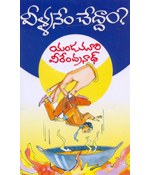
This novel by Yandamoori Veerendranath first came out in 2009, almost a decade after he wrote his last novel Antharmukham. Ever since that novel, which was triggered by his father's death, he hasn't written any fiction. However, he commenced writing non-fiction a short while later and managed to gain popularity in that genre too.
Veellanem Cheddam addresses the increasingly corrupted, greedy and selfish nature of the current society. He questions why someone needs to amass huge amounts of wealth by corrupt means only to leave it to one's future generations who wouldn't even remember them. He points out that by leaving almost unlimited wealth to the youngsters, the immensely rich are responsible for making them lazy, irresponsible and spoiled. He also calls attention to the role of writers to influence the society.
This is the most matured novel by Yandamoori I've read. And it's both though provoking and highly readable. The latest edition (fourth) also comes with an interview of the author, which is an added attraction.
Wednesday, April 6, 2011
Krishnaveni (8th Edition)
Just finished reading this popular novel by well-known author - Ranganayakamma. It's her first novel, written at the age of 19 in 1959. The latest edition has a specialty: the author added a new foreword and lots of footnotes. The author has ruthlessly played the role of self-critic and pointed out the many awkward things in her work. She honestly attributed her inadequacy to her immaturity at the time of writing it.

I never read this novel before but reading it along with the author's current analysis of the story and the characters felt like an education to me. The work completely awed me. I'm sure the effect would have not been the same without the footnotes, though I suspect that I would have been appalled by the protagonist's foolish behavior. I couldn't approve the whole love story part since the scenes seemed too far-fetching. Also, Madhav failed to make an impression on me. As the author herself admitted, the characters lacked clarity and are a mix of good and bad. I agree with the author's hindsight that the only solid character was Renuka and she had potential to occupy a greater part of the story.
The way, the author dissected the characters and certain conversations and opinions provided so much food for thought. I know that Krishnaveni doesn't need an introduction to Telugu literature lovers but this 8th edition is truly remarkable for the aforementioned reasons and more.

I never read this novel before but reading it along with the author's current analysis of the story and the characters felt like an education to me. The work completely awed me. I'm sure the effect would have not been the same without the footnotes, though I suspect that I would have been appalled by the protagonist's foolish behavior. I couldn't approve the whole love story part since the scenes seemed too far-fetching. Also, Madhav failed to make an impression on me. As the author herself admitted, the characters lacked clarity and are a mix of good and bad. I agree with the author's hindsight that the only solid character was Renuka and she had potential to occupy a greater part of the story.
The way, the author dissected the characters and certain conversations and opinions provided so much food for thought. I know that Krishnaveni doesn't need an introduction to Telugu literature lovers but this 8th edition is truly remarkable for the aforementioned reasons and more.
Friday, December 24, 2010
Athagari Kathalu

This book also includes a few stories that do not feature the "athagaru". These are nice too. The author's writing style is colloquial and reading it makes you feel that you are watching the whole episodes right through your window.
Thursday, November 25, 2010
Maa Pasalapudi Kadhalu


This book is a collection of short stories, 72 of them at one place, the stories by Vamsee, the director I have come to admire a lot more after reading his stories.. these were published in the weekly Swathi, which again, I personally admire a lot.. followed by the sequel Maa Diguva Godavari Kadhalu, which I guess, is yet to take a book form. Thanks to Vemuri Bala Raam for such wonderful publications in the magazine.
Baapu provided pictures to the stories and as usual it is tough to say which one is the best, the stories or the pictures. The combo of these two writer and artist to me is awesome.
I have never really been to Godavari districts but through his writings he makes me smell the river Godavari, play in the sand next to the river, enjoy the moonlit nights by the river, smell the pootarekulu and almost hear the voice of the characters and even go through ups and downs in the lives of the characters that are so realistic. I read in an interview of his that his technique is part real and part fiction but it seems so real to read, just like someone is telling you the story or actually it is happening in front of your eyes.. someone with an association to villages, not just Godavari would most certainly relate to the stories in a most personal touching way.. I do.. and you may like as well, so this book falls in my suggestions for GREAT READS.
Image Source.
Wednesday, September 15, 2010
Meeru Manchi Ammayi Kadu

Caption: Ayithenem manchi swabawam unna Ammayi.
A precious book composed and written by Yendamuri Veerendranath.
This Book is all about gals' life. How people around a Girl try to dominate over her life as early stage Parents, then Husband, Then In-Laws later even kids. A very obidient lady after listening life long to people around her without any individuality what she gets while she is at end of her life ? A Must to be read novel by everyone. It is a book which changed my life, it is the book which has shown me my identity.
- Sush
Recommendations from fellow TIAians - I
Subscribe to:
Posts (Atom)